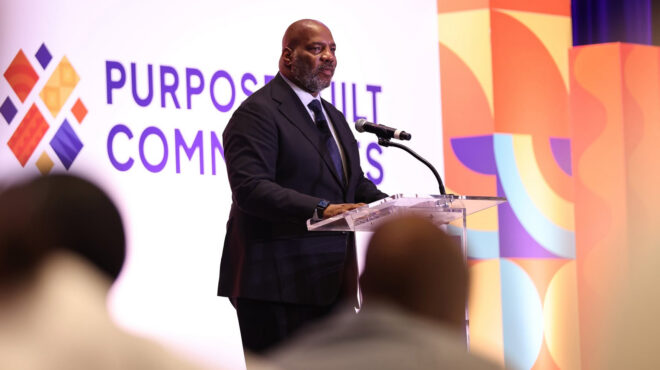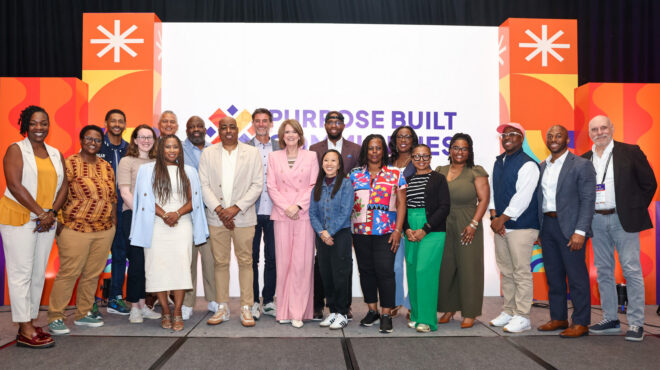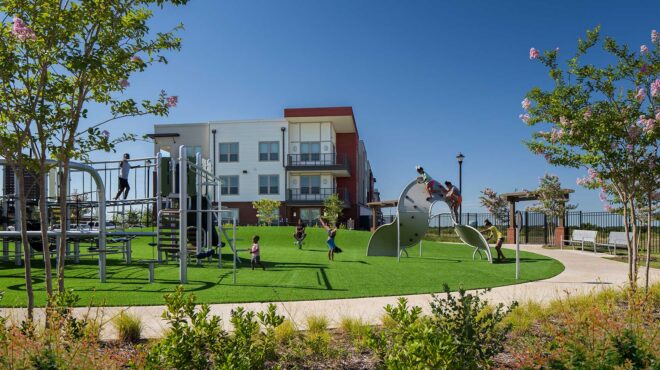
This year’s theme, Lift Every Voice, echoed throughout every keynote, workshop, and neighborhood tour. Across the conference, speakers challenged attendees to think bigger about what it means to strengthen neighborhoods in this moment. Transformation does not occur simply through programs or projects, but through long-term investments in people, relationships, health, housing, and civic belonging.
From powerful conversations about democracy and neighborhood identity to research on economic mobility and child wellbeing, one message remained clear: lasting transformation happens when communities are trusted, connected, and equipped to shape their own future.
Here are five takeaways that will stay with us long after the conference concluded in Jacksonville.
1. Residents are the Answer, not the Problem.
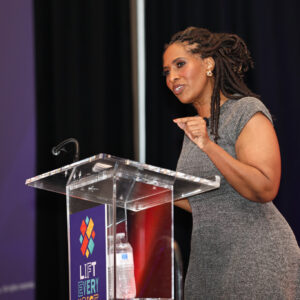
Keynote speaker Jotaka Eaddy, Founder and CEO of Full Circle Strategies, reminded attendees that communities already hold the wisdom, vision, and leadership needed to create lasting change. “Residents are the answer, not the problem,” she said, calling on leaders to move beyond transactional engagement and toward genuine partnership with communities.
Reflecting on the transformation of Atlanta’s East Lake neighborhood, Eaddy noted:
“It did not happen because someone imposed a solution from the outside. It happened because people made a deliberate, holistic decision to invest in a place, and to trust the people already living there, knowing they held the blueprint for what was possible.”
That same philosophy was visible throughout Jacksonville’s Historic Eastside, where conference host Lift JAX is working alongside residents to strengthen the neighborhood while preserving its history, culture, and identity. Residents describe this approach as “withintrification,” a transformation shaped from within the community itself.
In her opening remarks, Purpose Built Communities CEO, Carol Naughton, reinforced this idea, reminding attendees “That residents are not participants in neighborhood transformation. They are “the visionaries and architects of the change they want to see.”
2. Neighborhood Conditions Shape Lifelong Outcomes.
One of the strongest themes throughout the conference was the growing body of evidence confirming what communities have long understood: where a child grows up profoundly shapes their future.
Carol highlighted new research from Opportunity Insights examining the long-term impacts of the federal HOPE VI program. The findings showed that children who grow up in neighborhoods with high-quality housing, economic diversity, strong schools, and genuine social connections experience significantly better long-term outcomes, including higher lifetime earnings and increased college attendance.
Additionally, speakers emphasized that improving outcomes requires more than isolated investments. It requires addressing the full ecosystem surrounding children and families.
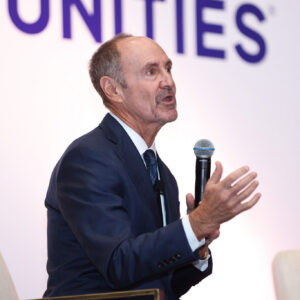
Dr. R. Lawrence Moss, CEO of Nemours Children’s Health, challenged attendees to rethink how America defines health altogether. Despite enormous healthcare spending, he noted that the United States continues to experience poor child health outcomes, including infant mortality rates that rank near the bottom among developed nations.
“Health is not equal to medical care,” Dr. Moss explained, emphasizing that only a small percentage of long-term health outcomes are shaped inside hospitals or clinics. The conditions surrounding families include housing stability, education, economic opportunity, safety, and community connection. These matter just as much to well-being as medical care, if not more.
Dr. Moss highlighted the work of Nemours Children’s Health, one of the country’s leading pediatric healthcare systems, and its partnership with REACH Riverside in Wilmington, Delaware. The collaboration demonstrates how healthcare institutions can play a broader role in strengthening neighborhoods, investing not only in medical care, but also in housing, education, and the conditions that shape long-term child wellbeing.
Together, these conversations reinforced a critical idea: healthy neighborhoods create healthier futures.
3. Lasting Transformation Requires Holistic, Connected Systems.
Throughout the conference, leaders challenged the idea that community transformation can happen through fragmented efforts or isolated services. In the workshop Building Economic Mobility in Place, panelists explored how many communities are overwhelmed not by a lack of services, but by disconnected systems that force residents to navigate barriers alone.
Speakers emphasized that economic mobility requires coordinated strategies connecting housing, education, workforce development, entrepreneurship, transportation, and wellness. Real progress happens when organizations stop operating in silos and begin aligning around shared goals for residents and neighborhoods.
This interconnected approach sits at the center of the Purpose Built Communities® model, which combines mixed-income housing, cradle-to-college education, community wellbeing, and economic vitality under the leadership of local Community Quarterback Organizations.
Jotaka Eaddy captured this holistic mindset during her keynote, reminding attendees that the goal is not simply managing poverty but creating pathways to prosperity. That shift in thinking, from short-term intervention to long-term ecosystem building, surfaced repeatedly throughout the week.
4. Democracy and neighborhood well-being are deeply connected.
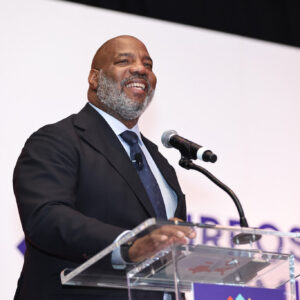
Several speakers explored how neighborhood relationships shape not only opportunity, but democracy itself. Author, journalist, and Columbia Journalism School Dean Dr. Jelani Cobb introduced attendees to the idea of “neighborism,” the belief that communities are strengthened when people recognize shared responsibility for one another.
Drawing connections between historical and modern systems of inequality, Cobb explained that injustice constantly adapts through new structures and policies, from redlining to predatory lending practices. Because those systems evolve, communities must remain equally adaptive, organized, and connected in response.
At the same time, Cobb emphasized that meaningful progress rarely arrives through one dramatic breakthrough. Instead, change is built through small, sustained efforts over time. He encouraged attendees to focus less on swinging for home runs and more on “making contact with the ball,” continuing to show up, organize, collaborate, and move the work forward step by step.
That message echoed in Carol Naughton’s closing remarks, where she reflected on the responsibility communities have to protect and strengthen democracy “neighborhood by neighborhood, community by community.”
Together, these conversations framed neighborhood transformation not only as community development work, but as civic work rooted in belonging, participation, and shared responsibility.
5. Hope is built collectively.
Even while acknowledging the challenges communities face, such as rising housing costs, economic uncertainty, political division, and ongoing inequities, the conference remained deeply grounded in hope. This is not passive optimism, but active, collective hope built through partnership, persistence, and long-term commitment.
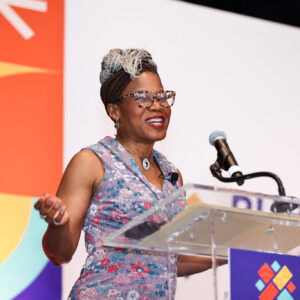
Jotaka Eaddy reminded attendees that every person in the room had been called to this work during a moment of overlapping crises because “place can either limit or launch people.” Majora Carter reinforced that idea during her keynote, sharing the now widely quoted truth: “Nobody should have to move out of their neighborhood to live in a better one.”
Throughout the week, speakers returned repeatedly to the power of relationships between neighbors, across sectors, and among organizations working toward shared goals. What emerged in Jacksonville was a powerful reminder that transformation is never the work of one institution alone. It happens because people choose to work together, trust one another, and remain committed even when the work is difficult.
Sustaining Momentum for Community Transformation
There was far more wisdom shared in Jacksonville than could ever fit into a single recap. Across plenaries, workshops, neighborhood tours, and conversations between sessions, attendees explored what it means to strengthen neighborhoods in ways that are resident-centered, collaborative, and built to last.
As we return to communities across the country, may we carry forward not only new ideas but renewed conviction. The work ahead will require courage, creativity, endurance, and trust. But this year’s conference reminded us of something powerful: when communities lift every voice, transformation becomes possible.