On a bitterly cold day in January 1966, Rev. Dr. Martin Luther King, Jr. and his wife, Coretta Scott King, moved into a dilapidated four-room cold water flat on Hamlin Street in the North Lawndale neighborhood of Chicago.
King was invited to Chicago by the Chicago Freedom Movement, a coalition of two dozen civil rights organizations working to improve the lives of Black Chicagoans, many of whom had been relegated to live in nearly uninhabitable conditions on the city’s South and West Sides. By experiencing firsthand what housing discrimination felt like in America’s second-largest city, Dr. King was able to illuminate before a national audience exactly what poor Black Americans were enduring up North. Shortly after moving in, the Chicago Tribune reported King saying, “We don’t have wall-to-wall carpeting to worry about, but we have wall-to-wall rats and roaches.”
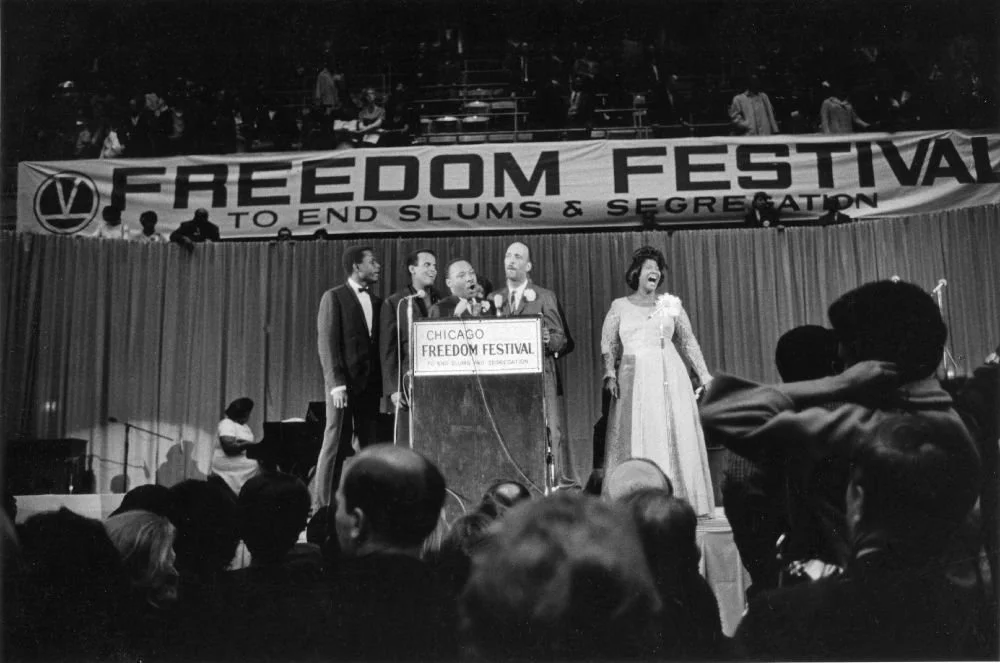
For the next several months, Dr. King led a series of housing marches and strikes in Chicago to raise awareness of how federal and local housing policies not only allowed but promoted discrimination and took advantage of poor Black families.
During one particular housing demonstration he led in Marquette Park, then an all-white neighborhood, a violent white mob attacked Dr. King and the protestors, striking him in the head with a rock. After the protest, Dr. King told reporters, “I’ve been in many demonstrations all across the South, but I can see that I have never seen, even in Mississippi and Alabama, mobs as hostile and as hate-filled as I’m seeing in Chicago.” This period of Dr. King’s activism not only raised awareness of yet another form of racist violence, it laid bare that racism is not only a product of the South.
It took Dr. King’s death to change federal housing policy. One week after his assassination in April 1968, Congress passed and President Johnson signed into law the Fair Housing Act. This monumental piece of legislation prohibited discrimination concerning the sale, rental, and financing of housing based on race, religion, national origin, and sex.
But while the Fair Housing Act made housing discrimination illegal, that alone was not restitution for what many Black families and Black neighborhoods lost due to decades of disinvestment and denial of critical benefits and opportunities for economic advancement. Over time, other federal housing programs like the Low-Income Housing Tax Credit (LIHTC) program, HOPE VI, and, more recently, the Choice Neighborhoods program have helped to move the needle of progress. These programs provide federal investment and incentives for developing high-quality, affordable, more equitable housing in neighborhoods where discrimination and segregation had been the norm. Many Purpose Built Network Members and their partners have accessed the LIHTC program to develop affordable rental housing. Additionally, half a dozen communities in the Network have won Choice Neighborhoods planning or implementation grants (including Canopy South and Seventy-Five North in Omaha; REACH Riverside in Wilmington, DE; Lift Orlando; and Northside Development Group in Spartanburg, SC). With these resources, Network Members have designed and developed (or are in the process of developing) vibrant mixed-income housing to transform neighborhoods that have historically and chronically been disinvested.
While our model’s components are designed to drive upward economic mobility, improved health outcomes, and greater racial equity, the mixed-income housing component specifically builds upon Dr. King’s hard-won legacy. Economic integration, starting with housing, helps to reweave the neighborhood fabric unraveled by policies and practices that forcefully isolate people from what we know makes prosperity possible due to their race and socioeconomic status. Deploying a mixed-income housing strategy ends the economic isolation of living in concentrated poverty, creates opportunities for families to stay in their neighborhood as their incomes rise, and attracts other public and private investments necessary to meet the neighborhood’s needs.
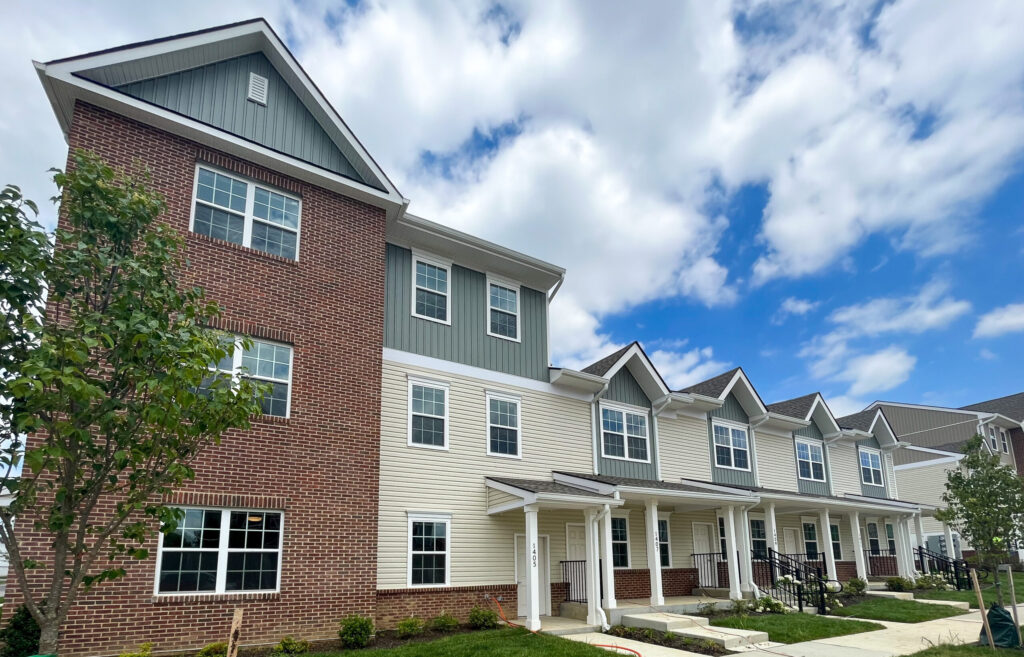
Economist Raj Chetty and his team have identified “economic connectedness” – the opportunity for people at different economic levels to form friendships – as the form of social capital that drives economic mobility. Mixed-income housing fosters proximity and, with intention, can become a powerful piece of the puzzle to drive upward economic mobility.
Finally, when we refined our model several years ago, we recognized that if we were serious about building Black wealth, we needed to add homeownership to our model. Our Network Members drove this evolution, and across our Network, examples of affordable, accessible homeownership abound, including the first community land trust for homeownership in the Network – the Trust at East Lake.
Our model for neighborhood revitalization is constantly evolving as we learn more, conditions change, and the needs and aspirations of the communities we work with shift. Our goal is to advance housing strategies rooted in racial equity, and how we use all these different tools – as imperfect as they may be – will get us closer to building the Beloved Community Dr. King envisioned.
Learn More
- Power, Politics, & Pride: Dr. King’s Chicago Crusade (Video)
- The Chicago Freedom Movement (Blog)
- Riverside receives historic $50M fed housing grant (Article)
- South Omaha Receives $50 Million Choice Neighborhoods Implementation (CNI) Grant (Blog)
- Lift Orlando and Orlando Housing Authority Receive $500,000 Grant for Neighborhood Redevelopment (Blog)