Purpose Built Communities reflects on 2026 progress and challenges, identifying priorities and strategic shifts to advance neighborhood transformation and achieve its 2028 goals.
Strategic Plan Priority 1: Drive Success in Neighborhoods
Ribbon-cutting ceremony at Woodlawn United
Across the Purpose Built Network, years of planning, partnership, and resident leadership are translating into visible neighborhood change. We remain laser focused on the integration of all model components to drive durable neighborhood transformation. We support Community Quarterback Organizations with best practices that accelerate learning, data infrastructure to measure impact, specialized expertise that may not be available in-house, and strategic financial investments where possible.
A few examples include:
Amplify GR is advancing major housing and development projects to create the mixed-income neighborhood ecosystem that drives connection and opportunity across incomes.
Forest Forward is honoring South Dallas’ rich legacy and stimulating economic vitality by reopening the historic Forest Theater for the first time in more than 50 years.
In Orlando, in partnership with the district, Lift Orlando opened Orange Center Elementary School, a new charter school, advancing a community-led effort to reimagine the neighborhood-serving school.
REACH Riverside opened the 81K-square-foot Kingswood Center, bringing education, health, workforce, and family support together in one neighborhood hub.
In West Palm Beach, RISE Coleman Park transformed a vacant lot into The Culture Yard, a resident-centered gathering place for culture, connection, community wellness, and neighborhood programming.
These accomplishments, and many others like them around the Network, demonstrate how Purpose Built delivers specific expertise and resources that enhance the opportunities available to residents.
A significant part of Purpose Built’s work in 2026 focused on accelerating Network Members’ progress toward stronger neighborhoods by making a range of strategic monetary and consultative investments and further defining our impact and measurement frameworks. We made $4.6M in cash and in-kind investments in Network Members (see Q3 overview), supporting strategic and neighborhood planning, data systems, and targeted initiatives. Partnerships with Catalyst Exchange and the Healthcare Anchor Network (HAN) expanded access to specialized consultants, workforce development, and investment opportunities, while collaborations with Shareable and the Build From Within Alliance introduced new approaches to resident-informed resource sharing and small-business development.
Blue Meridian Partners (BMP) is also making major investments in communities demonstrating results, providing an opportunity to accelerate progress and bring successful neighborhood strategies to greater scale. Several Network Members are developing investable plans that could unlock significant new capital from BMP. These investments are contingent on the following criteria:
Develop a strong investable plan with ambitious goals for children and families in their neighborhoods along with a credible path to reach them at scale.
Secure new local and regional funding to directly support the plan alongside BMP at a mutually agreed-upon level.
Gain approval from Blue Meridian’s General Partners, who will make the final investment decision.
These potential investments for Network Members include $25M for REACH Riverside (Wilmington), $10M to $15M for Cherry Hill Strong (Baltimore), $20M for Amplify GR, and $10M to $15M for RISE Northwest (Dayton).
STEM Career Exploration event at Orange Center Elementary School in Orlando
We also continued to deepen our work in early learning and resident-centered neighborhood planning, recognizing that children’s opportunities are shaped by their relationships, the physical environments around them, and the services available to them. Through Where Families Thrive we completed early learning ecosystem planning at Seventy Five North (Omaha), Amplify GR, Canopy South (Omaha), Cherry Hill Strong (Baltimore), and LIFT JAX (Jacksonville), while moving into implementation in RISE Coleman Park (West Palm Beach) and South City Foundation (Tallahassee). This planning helps communities assess their early learning needs and develop multiyear strategies to expand access to quality childcare and strengthen support for families with young children. We also expanded neighborhood planning work with Gehl and First Place Partners in Tallahassee and Omaha, applying early childhood science and resident priorities to the design of streets, public spaces, and other neighborhood environments that foster social connection, belonging, and healthy early childhood development. Our forthcoming publication, the Centering Residents Guidebook, brings together research and practitioner experience to strengthen resident leadership and power in neighborhood transformation. Each of these initiatives reflects Purpose Built’s deep partnership with Network Members, providing expert support, positioning them for major investments to increase and accelerate impact.
Providing flexible debt is another way we support Network Members to move important projects forward. Our initial $2M Neighborhood Catalyst Loan Fund pilot supported loans to Lift Orlando, Focused Community Strategies (FCS) in Historic South Atlanta, and LIFT JAX for projects that conventional financing does not serve well. With additional funds raised and applications solicited from two more potential borrowers, we are learning how this approach can respond to the timing and financing needs of neighborhood transformation. We hope to expand the fund as fundraising allows.
Alongside these investments, we have made significant progress in defining and measuring the impact of our work. In 2026, we brought together our Theory of Change, a Model Codification initiative, and our refined Impact Narrative to establish a clearer, shared understanding of how the Purpose Built Model works, the outcomes we expect, and how we will measure progress. (Summarized version of the Theory of Change and Impact Narrative) Our growing data and evidence capacity is bringing us closer to our vision of becoming an Impact Network that consistently measures neighborhood progress, uses evidence to strengthen strategies and accelerate results, and demonstrates our impact to the broader field.
We are also revising the Progression Matrix and identifying additional data tools to strengthen our ability to chart progress in neighborhood transformation, refine our coaching and support, and direct resources toward strategies that accelerate neighborhood impact, with progress updates planned for Q1 2027. Alongside this work, we are analyzing 10 years of population data to establish baseline measures and preparing to launch a revised Flourishing Neighborhood Index in several neighborhoods to measure residents’ experiences of belonging and agency.
Milestones on the Impact Network Journey
Network Members are building the ability to measure and articulate their impact, moving from one-time reporting toward more consistent, public, and integrated data systems. The Ballmer Group acknowledged this work with an investment of $17.6M to build data systems that will enable Purpose Built Communities and our Network Members to have and use data to deepen and demonstrate impact. This investment enables Purpose Built to expand Network Members’ data capacity through a Salesforce-based system aligned with our measurement framework. 2026 has been a lot of planning, design, and change management preparation that establishes a solid foundation for data system adoption by a first wave of eight to 10 Network Members in 2027.
The majority of Network Members are also demonstrating their commitment to data by sharing a Community Data Dashboard on their websites. These dashboards share 17 metrics drawn from public data sources and are aligned to the Theory of Change. Some examples include the East Lake Foundation, Focused Community Strategies, LIFT JAX, RISE Coleman Park, and Woodlawn United.
2026 Data and Impact Convening
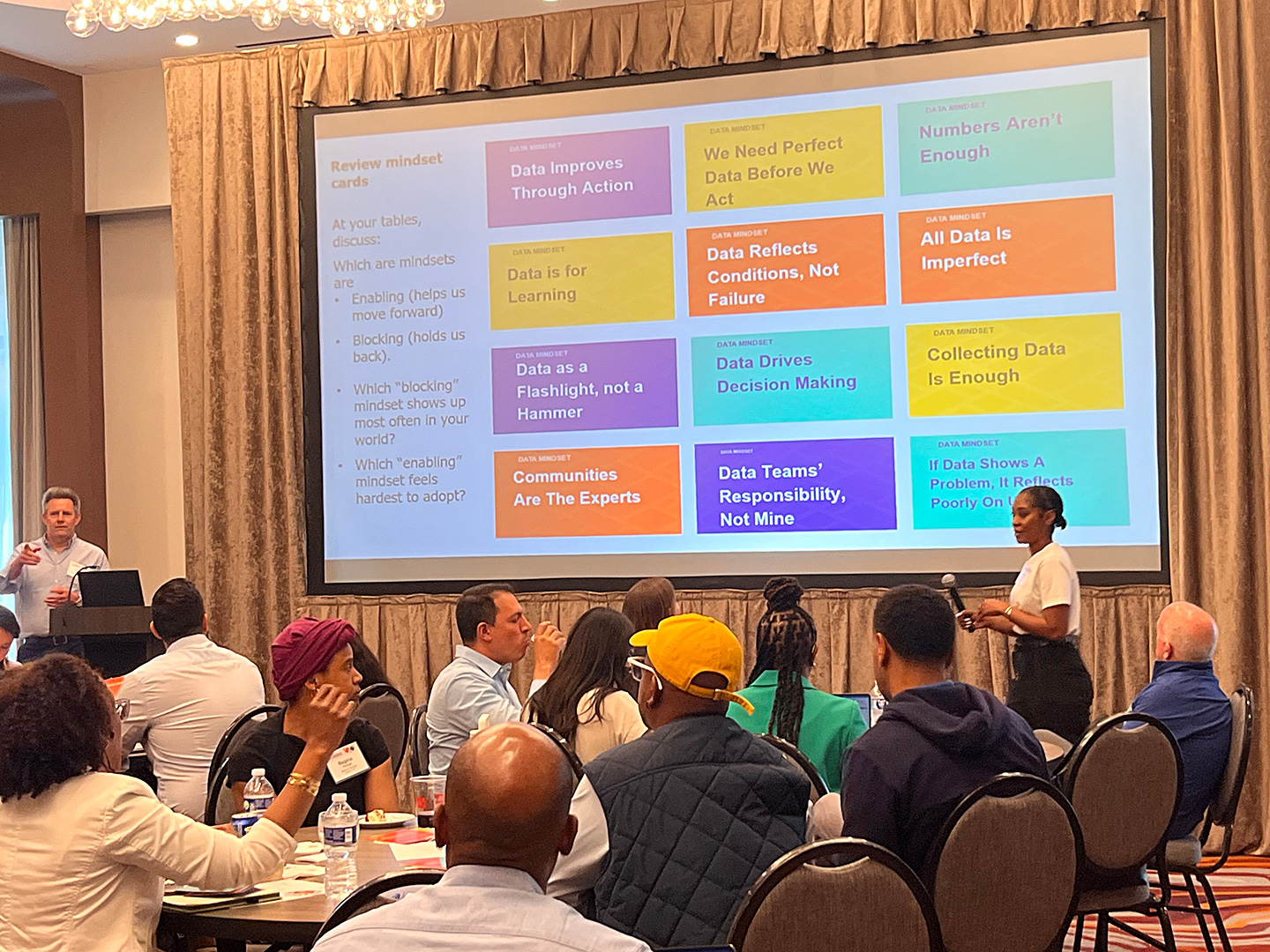
In May, we hosted our first Data and Impact Convening, an important opportunity to talk with executive directors and key data staff about our journey toward becoming an Impact Network. We had all but two executive directors in attendance at the two-day convening, which was a meaningful statement of how they value this work.
These advances demonstrate major progress toward our 2026 data and measurement milestones with more Network Members equipped to track their progress, use evidence to refine their strategies, and demonstrate results in their neighborhoods.
Strategic Plan Priority 2: Strengthen the Network as a Collective
Network Member leaders at the 2026 Prosperity Starts With Place™ National Conference
The Purpose Built Network is becoming stronger, with outstanding local leaders who share a commitment to resident-centered transformation and increasingly draw on one another’s knowledge, experience, and expertise. Purpose Built’s work now reaches neighborhoods with a combined population of approximately 600K people across our Network Members, prospects, and Network+ communities. The value of belonging to this Network is reflected in Network Member feedback: the Network’s overall value rating increased from 83% in 2023 to 89% in 2025, with the next survey planned for mid-November. All Network Members participate in our Community of Practice, and engagement on PBCx increased from 60% to 71%, demonstrating the growing importance of peer learning and shared resources. These relationships and opportunities to learn from one another are among the Network’s greatest strengths.
Our national conference remains the cornerstone of this collective experience. This year marked the 13th year of our national conference. Purpose Built’s 2026 national conference, themed Lift Every Voice, brought approximately 700 attendees from 32 states and over 250 organizations to Jacksonville’s Eastside. Network Members joined community leaders, elected officials, educators, developers, funders, and other partners to share knowledge, strengthen relationships, and advance their collective commitment to neighborhood transformation.
Demand to join the Network continues to grow, reflecting the value of working collectively to achieve lasting neighborhood transformation and improve opportunities and outcomes for residents. The Network has grown to 29 members, with 11 additional leads and nine prospects, moving toward our Strategic Plan goal of at least 35 high-quality members by 2028. In March, we welcomed RISE Northwest Development in Dayton, Ohio, as a new Network Member. As interest grows, we have refined our prospect process and membership criteria to establish clearer expectations and better understand the support each Community Quarterback needs, ensuring that growth continues to strengthen the collective.
Network Members were also able to collaborate and connect in small and large ways throughout the year. More than 40 Network Member staff participated in the May Data and Impact Convening. Monthly Community of Practice sessions focused on education, policy, and data cohorts, and peer exchanges continued to connect leaders, including through our first-ever Leadership Development Cohort for select leaders. The Leadership Development Cohort offers structured opportunities for reflection, peer learning, skill development, and individualized coaching all designed to increase leader retention, enhance leader capacity, and drive sustainable impact in the neighborhoods they serve.
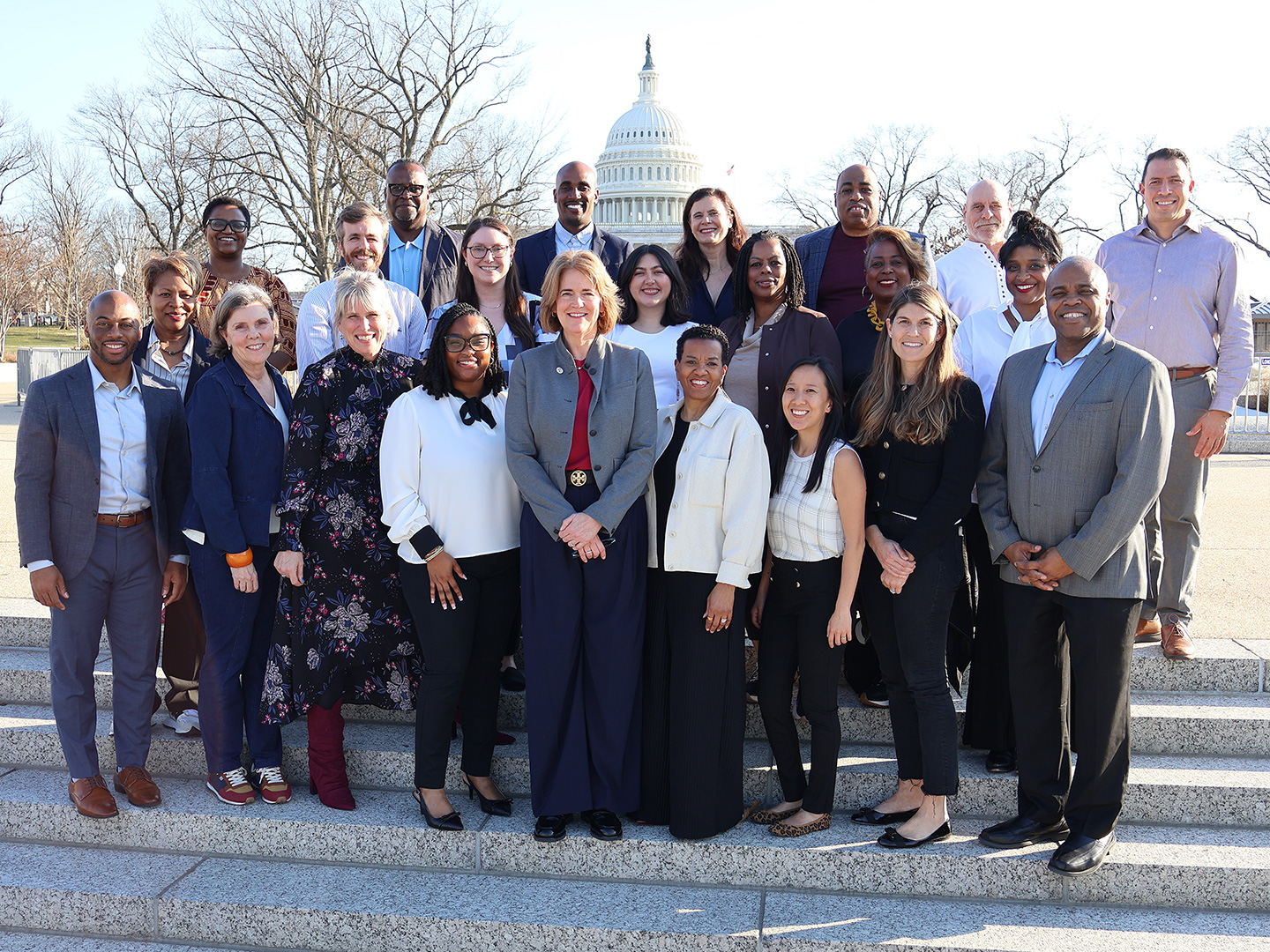
Purpose Built and Network leaders on Capitol Hill during the 2026 Policy Summit
This year’s Policy Summit (previously Hill Day) in March brought Network leaders together for advocacy training and a day on Capitol Hill, resulting in 38 congressional meetings. Policy work continues throughout the year, with focused attention and support for Network Members on Opportunity Zones and 530a accounts, as well as state- and city-level efforts in Florida, Atlanta, and Tulsa.
Additionally, we continue to support Network Members as they pursue Opportunity Zone designations to attract investment to neighborhoods where coordinated transformation is already underway. To date, 72% of Network Members submitted Opportunity Zone 2.0 submissions, and final U.S. Treasury designations are pending. We also published a Community of Practice White Paper to share what we are learning with the broader field. These activities reflect our growing emphasis on helping local leaders use public policy to advance neighborhood investment and economic opportunity.
Identifying and testing new strategies to scale our impact offers exciting opportunities to support more neighborhoods. While deepening support for Network Members and prospects aligns with the first two priorities of the strategic plan, Purpose Built is developing strategies to scale Purpose Built’s impact in new and innovative ways. We continue to focus on the Network as a center of excellence while exploring ways to meet the growing demand for our expertise and support in neighborhoods beyond existing and prospective Network Members.
Through our emerging Network+ work, we are offering our expertise with the support of Blue Meridian for Maryland’s ENOUGH Initiative and Atlanta’s Neighborhood Reinvestment Initiative (NRI). We also received a grant from the Georgia Department of Community Affairs to provide technical assistance to Gainsville and Statesboro. Additionally, we are expanding and deepening impact as we plan to test new ways to share our knowledge and experience more broadly, including through new ideas such as a Neighborhood Academy and the potential expansion of our knowledge platform, PBCx, while continuing to prioritize high-quality support for Purpose Built’s Network Members.
As we evolve our offerings to impact more neighborhoods and people, Blue Meridian Partners continues to be a generous and supportive partner. In August, we were invited by BMP to participate in their Resilience and Reinvention Initiative (R&R), a process designed to help organizations identify and pursue transformative opportunities that can strengthen impact and unlock new pathways for growth. This initiative began in earnest in September and is scheduled to be completed by the first quarter of 2027. The final deliverable is a case to advance transformative actions and offer new opportunities for continued BMP funding support.
Strategic Plan Priority 3: Assert Leadership in the Field
PBCF leaders with Jelani Cobb at the 2026 Prosperity Starts With Place™ National Conference
Cover image of the Creating High-Opportunity Neighborhoods: Evidence from the HOPE VI Program report
Purpose Built’s national influence and thought leadership are growing. New research from Opportunity Insights shows the long-term effects of HOPE VI, reinforcing our approach to neighborhood transformation, increasing demand for our support, and elevating our approach and expertise across the field. As of October 2026, we elevated Purpose Built’s thought leadership with 13 speaking opportunities for Carol Naughton as CEO — a 60% increase over the prior year — through platforms including Brookings Institution and Opportunity Insights, Harvard EdRedesign’s DREAM ON Q&A Screening, Thriving Neighborhoods Lab, Total Impact Summit in Philadelphia, Tomorrow City USA, CFLeads Economic Mobility Summit, Kingswood Community Center’s 80th anniversary, One Community Dinner in Spartanburg (Carol joined a panel with Raj Chetty, Dr. Russell Booker, and Network Member leader David Summers), Working Class Insights Forum, the Spartanburg Academic Movement’s 2026 THRIVE conference, Forbes Nonprofit Council (46.8M online readership, How to Become a Neighborhoodist), Governing.com (373K online readership, How the New Housing Law Can Reach Neighborhoods that Need It Most), the Impact Podcast with John Shegerian (1K monthly listeners), Do Better podcast (2K monthly listeners), and the Nemours Well Beyond Medicine podcast (6K monthly listeners). The Do One Better episode is scheduled for release this month (2K monthly listeners). Our second Forbes Nonprofit Council article, The Business Case for Investing in the Social Determinants of Wealth, was released the last week of October, and our third article will be released in the first quarter of 2027.
This year we’ve expanded our impact and national influence through strategic communications. Our digital presence continues to grow. LinkedIn surpassed 9K followers, up 37% year over year, with an average engagement rate of 8.2% — more than five times the nonprofit industry benchmark. Website views reached approximately 87K in Q1–Q3, up 37.8% year over year, while newsletter subscribers grew by 2,045 to 11,644, with a 29.6% average open rate.
Strategic Plan Priority 4: Strengthen the Capacity and Sustainability of PBCF
The Purpose Built Communities Foundation team
In 2026, Purpose Built strengthened its organizational foundation while adapting its fundraising strategy to sustain our work, expand impact, and meet the long-term ambitions of our Strategic Plan. The Paving Pathways to Prosperity national campaign continues to advance, although shifts in the philanthropic landscape and extended donor decision-making timelines throughout 2026 have affected the pace of commitments. Since launching the campaign in 2024, we have raised approximately $73.8M toward our $125M campaign goal (59% of goal), with an additional $6.2M in anticipated commitments, bringing our projected year-end campaign total to $80M. This puts us at 98.5% of the Phase 1 campaign goal of $81.2M.
Tour of Drew Charter School during the 2026 Prosperity in Practice funder immersion experienceIn October, Purpose Built Communities hosted its inaugural Prosperity in Practice funder immersion experience in Atlanta, welcoming more than 60 current and prospective philanthropic partners for a neighborhood tour, conversations with residents and Network leaders, and discussions about education and economic opportunity. Held in partnership with Grantmakers for Education, the event demonstrated our integrated approach to neighborhood transformation, strengthened philanthropic relationships, and opened opportunities for future investment.
We are strengthening our fundraising strategy and team to expand philanthropic reach, deepen donor engagement, and sustain progress toward our $125M campaign goal. This next phase prioritizes strengthening frontline fundraising capacity and advancement infrastructure; diversifying philanthropic support across institutional foundations, family offices, community foundations, ultra-high-net-worth individuals, and corporations; expanding and qualifying our national prospect pipeline; and improving portfolio management, donor stewardship, and revenue forecasting. These strategic enhancements will position Purpose Built Communities to attract transformational investments, sustain philanthropic momentum, expand national impact, and advance our mission through 2029 and beyond.
Paving Pathways to Prosperity came close to achieving its 2026 goals; however, the timing of pledges and the restrictions associated with much of the investment create a challenge for the 2027 budget. The current revenue forecast for 2026 is $25.7M, exceeding our 2026 operating budget revenue goal of $19.9M. Keep in mind this revenue includes multiyear investments; some of the $25.7M will be recorded on our balance sheet as pledge receivables until the cash payments are received. Purpose Built has sufficient cash to support operations through 2026 and is projected to end the year with approximately $500K to $1.4M in cash. Expenses are tracking closely to plan and are projected to finish in line with the budget, resulting in a projected surplus of $814K.
Our budget for 2027 will be significantly smaller than in 2026, and work will be paused, slowed, or stopped until revenues are improved. The conservative expense budget gives us an opportunity to reevaluate priorities and find innovative ways to achieve our goals. We remain optimistic about our funding future and recognize that this situation is not unusual for nonprofit organizations as they go through periods of growth.
In June, we turned our attention to annual planning and budgeting. An intentional shift was made to focus on building a work plan and associated budget based on a two-year versus a one-year planning horizon. This shift keeps us focused on the pivotal work in 2027 that must be achieved to finish the strategic plan in 2028. Despite building a conservative 2027 budget, we remain committed and excited about continuing this important work in 2027, albeit at a slower pace and with an eye to making the necessary trade-offs our cash flow position requires. As we are successful in our fundraising efforts and bringing in multiyear commitments, we will reevaluate the budget and its implications on the pace of the work. Despite this current reality, we remain optimistic and continue pursuing a solid financial foundation in 2027 and beyond.
Purpose Built has continued to strengthen the talent, technology, and governance infrastructure needed to support our organization and the growing Network, thereby building long-term sustainability. Our team has grown from 20 employees in 2023 to 44 in 2026 (with four new hires this year), alongside investments in a more intentional employee experience rooted in racial equity, stronger hiring and onboarding practices, staff development, planning, and strengthened senior leadership capacity. We are also advancing an enterprise-wide technology strategy and roadmap focused on improving staff support, cybersecurity, core platforms, and AI governance. We have also invested in process, project, and change management practices that are helping our growing team work more consistently, stay focused on our highest priorities, and adopt new systems and ways of working with greater discipline. Together, these investments are strengthening organizational capacity as we develop an economic model to guide responsible growth and the cost of serving additional neighborhoods.
One of the most exciting accomplishments in 2026 is the move to establish a permanent home at 505 Moreland Avenue in East Atlanta. Designed to support our hybrid workforce, the new space will create more opportunities for staff collaboration, connection, and learning. More than an office, it will provide a long-term home for our organization and a welcoming place to engage Network Members, partners, and other leaders committed to neighborhood transformation.
Purpose Built’s 12-member board of directors enhanced our governance capacity through a strong board committee structure, 100% participation in the national campaign, and $620K in board giving through the end of the third quarter. In 2027, the board will add a governance committee to strengthen the long-term sustainability of the organization. As we enter 2027, the board’s continued leadership in opening doors, deepening funder relationships, and helping secure long-term financial sustainability will be essential to sustaining our progress and realizing the ambitions of our Strategic Plan.
What’s Ahead in 2027
As we enter 2027, Purpose Built will focus its work on three interconnected priorities that build on our progress in 2026 and position us to achieve our Strategic Plan goals. These priorities will guide us to where we concentrate our efforts, how we make strategic decisions, and where we direct our resources over the remaining years of the plan. Together, these priorities strengthen our support for Network Members, deepen our ability to measure and learn from impact, identify new strategies to scale our impact, and ensure that the organization has the revenue, talent, systems, and infrastructure to sustain the work.
Support the Network
Maintain support for Network Members and prospects while strategically testing ways to extend Purpose Built’s impact to more neighborhoods and people.
Advance Data and Measurement
Expand consistent data collection, analysis, systems, and use of evidence across Purpose Built and the Network.
Ensure Sustainable Revenue and Operations
Build a sustainable annual funding model while strengthening talent, technology, communications, and organizational infrastructure.
Gratitude for 2026, Momentum for 2027
Purpose Built enters 2027 with greater clarity about our work, stronger evidence and infrastructure to support it, and a sharper understanding of where focus will be required to turn momentum into lasting impact. We have made meaningful progress this year, and there is more to do. Our progress in evolving our coaching, services, and tools to support high-fidelity execution of the Purpose Built Model, strengthening our data and evidence systems, elevating thought leadership in the sector, and securing the Ballmer investment is strengthening our ability to become an Impact Network. These improvements enable consistent measurement of neighborhood progress, increase collective learning through the experience of Network Members and Network+ neighborhoods, and leverage that knowledge to accelerate impact. The first Catalyst Fund loans clearly demonstrate how flexible capital can accelerate how Network Members move projects forward, and advocacy and convenings are making space for leaders to learn and act together.
Our next chapter calls for greater focus and depth, securing the long-term financial commitments that sustain the work, directing expertise and resources where they can have the greatest impact for Network Members, and strengthening the organization to deliver on the promises of our Strategic Plan.
Thank you for your governance, your counsel, and your commitment to the Network. We look forward to completing this year-end picture with the results from the final months of 2026 and continuing the work together in 2027.